Supporting you
Being diagnosed with womb cancer can be life changing and can leave you feeling overwhelmed with different thoughts and emotions. You may worry what the future might hold and have lots of questions and uncertainties. There is no right or wrong way to think or feel. We all cope with things in different ways and you will find a way that is right for you.
Common feelings include:
- Fear and anxiety
- Anger or irritability
- Guilt
- Sadness or depression
- Feeling alone
- Worry
- Grief or loss
It might help to know that these feelings are common and many people that have been diagnosed with womb cancer experience these feelings at some point. It is important to acknowledge how you feel and seek help if you need it.
Talking to those people close to you or other people affected by cancer can often help. Your gynaecology clinical nurse specialist (CNS) is there to help you through your diagnosis, treatment and beyond and is often well placed to signpost you to local services that might help.
You may need some help to come to terms with your diagnosis and how you are feeling. Everyone is different and there are many approaches to support, it may take some time to find what works for you; some suggestions for support are listed below.
Here to help
Are you ok?
If you need confidential advice or support related to womb cancer you can email [email protected]
Your message will be answered by Cath or Anne, our Clinical Nurse Specialists.
Peaches’ Online Support Groups
These groups aim to be a safe space for those affected by womb cancer, led by our clinical nurse specialists, Cath and Anne. Each group is an opportunity to meet others with similar experiences to talk, listen, ask questions, share stories and tips with people who understand.
Our coffee morning group meets virtually on the first Tuesday of each month, 11am to 12 noon, and our evening online get togethers are on the third Wednesday of the month, 7pm – 8pm.
We also offer online groups if you are Newly Diagnosed, a Younger Person, or navigating Later Stage or Recurrent Womb Cancer.
Upcoming Events
Dates and times for support groups and webinars
 Events
Webinar: Mindfulness for Christmas
Join us on Thursday 10 December 12.30- 1.30 PM We are pleased to invite you to a new expert speaker
 Events
Meet Peaches In-Person – Liverpool
Come and say hello at Liverpool Central Library on Tuesday 17 November 2026. Peaches Womb Cancer Trust will be taking
 Events
Peaches November 2026 Evening Support Group
Online Womb Cancer Support Wednesday, 18th November, 7pm-8pm, via Zoom Listen, talk and share Peaches Evening Support Groups aim to
 Events
Webinar: Managing Work and Womb Cancer
Join us on Thursday 19 November 12 – 1 PM We are pleased to invite you to a new expert
 Events
Webinar: Understanding the Late Effects of Radiotherapy
Recorded on Friday 2 October, 2026 We are pleased to invite you to an expert speaker webinar exploring the late effects
 Events
Webinar: Patient Initiated Follow Up (PIFU)
Watch the recording with Anne, a Clinical Nurse Specialist and Peaches volunteer, to find out more about Patient Initiated Follow
 Events
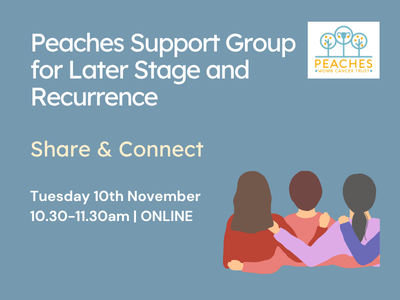
Later Stage and Recurrence Support Group
Online Womb Cancer Support Tuesday 10th November 2026, 10.30-11.30am, via Zoom Share and Connect This Peaches Support Group aims to
 Events
Peaches November 2026 Coffee Morning
Online Womb Cancer Support Tuesday, 3rd November, 11am-12pm, via Zoom Listen, talk and share Peaches Coffee Mornings aim to be
 Events
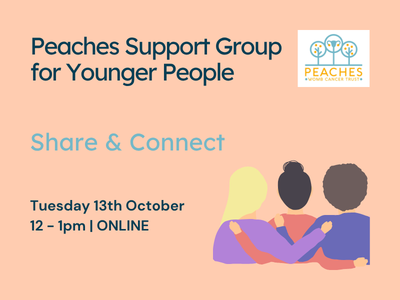
Younger Person’s Support Group
Online Womb Cancer Support Tuesday, 13th October, 12-1pm, via Zoom Share and Connect This Peaches Support Group aims to be
 Events
Caring for Cancer Yoga: Womb Cancer Session
As part of Gynaecological Cancer Awareness Month, Peaches Womb Cancer Trust is delighted to be working with The Yoga for
 Events
Newly Diagnosed with Womb Cancer?
Free 3-week online course to help you feel informed, supported and less alone Being told you have womb cancer can
 Events
Peaches In-Person Support Groups – Manchester
In-Person Womb Cancer Support Listen, talk and share Peaches In-Person Support Groups aim to be a safe space for those
Visit our News & Events page or email us to find out more.
“To find a place where you suddenly realise that you’re not alone is hugely important.”
– Peaches’ coffee morning attendee, March 2025
Please note: As a UK charity our support services are designed for people living in the UK. However, everyone is welcome to access, use and share the information, videos and resources available on our website.
Peaches’ Support Videos
We have created a series of videos specifically for those affected by womb cancer. We explore a wide range of topics our community has highlighted as areas where more information about womb cancer and support are needed. In addition to these, you will find videos covering a variety of areas including menopause, mental health, pre and post surgery exercises and sexual wellbeing.
Watch Peaches’ Support VideosPeaches’ Support Articles
For the many questions you may have, we share regular support articles – written by womb cancer clinicians, which offer clear, trusted guidance on topics such as fatigue, lymphoedema, and other related topics. Our support articles are there any time you need them, whether during or beyond your womb cancer treatment.
Read Peaches’ Support ArticlesPeaches Facebook Community
As well as our public social media, our closed Facebook group is a safe, welcoming space for anyone diagnosed with womb cancer. Launched in June 2025, it’s growing every day with members who share experiences, offer support, and connect with others who understand.
Cath, our Clinical Nurse Specialist, and the Peaches Team are there to make sure everyone feels heard. Search for Peaches Womb Cancer Support Group on Facebook.
Or, if you’re supporting someone with womb cancer, you’re welcome to join our private Facebook Group for Family and Friends. It’s a space to ask questions, share worries and turn to for support. Search Peaches Womb Cancer Support Group – Family and Friends on Facebook.
Other sources of support
Clinical Nurse Specialist (CNS)
You should be introduced to a CNS at diagnosis. They are a senior nurse with experience in gynaecological cancer and they are a point of contact with the team that is treating you. They can help you navigate your way through your treatment and beyond. They can provide information and signpost you to various methods of support including practical, financial, and emotional. They can offer a listening ear and it can be helpful to talk through your concerns and share your worries with someone outside of your family.
Support groups and online communities
Sharing your experiences with others in a similar situation can often be helpful. There may be a support group near you and your CNS might be able to put you in contact with a local group.
Cancer support centres
These are often found onsite in hospitals or close to those providing cancer treatment. They usually provide drop in information and support. Many also offer services such as complimentary therapies and activities such as gardening or choir groups. Local hospices may also provide day services open to those affected by cancer and similar support services and complimentary therapies.
When visiting these centres you don’t have to talk about your experience. They can be places where you can take some time for yourself surrounded by people who understand what you are going through. Speak to your CNS to see what services are in your local area.
Professional Support
If you feel that you would benefit from some professional help dealing with your feelings, then speak to your CNS or General Practitioner (GP) in the first instance as they will know about the services available in your area. These will be free to access. If you would like to find a therapist yourself the BACP can help you, although there would be a cost involved.
British Association of Counselling and Psychotherapy (BACP) or call 01455 883300
Support for relatives and carers
Caring for someone diagnosed with womb cancer can feel overwhelming and there can be a lot to think about. You may feel shock, anger, fear, and sadness among other emotions, or you may be struggling to admit that this is happening at all. All these reactions are common and completely normal and there is no right or wrong way to feel.
It can be hard to see your relative or friend in distress and you may feel unsure how best to help. Roles may change in the relationship due to the impact of the diagnosis and treatments and this can be difficult for both of you to adjust to. You both may be reacting to and coping with the diagnosis in different ways, and this can put strain on even the strongest of relationships. You might be trying to protect your partner from your worries or feel that your concerns are not as important, but talking about how you feel may make it easier for your partner to be honest about how they are feeling and may help you to feel closer.
Be aware of how you are feeling and coping, it is important that you care for yourself. If you think you would benefit from some support, you could contact the CNS allocated to your relative or friend as they are here to support you too. They can offer a listening ear to your concerns and signpost you to services in your area. Your GP is another good place to gain support and they can also refer you to local support that is free of charge.
Macmillan Cancer Support
Provides practical advice, information and support including emotional well-being during cancer and beyond. A free support helpline is available.
www.macmillan.org.uk
Support line: 0808 80800 00 (Monday to Friday, 9am to 8pm). Interpreters are available.
Maggie’s Centres
Offers free online and face to face practical, emotional, and social support to people with cancer and their families and friends.
www.maggiescentres.org
Please note, regrettably Peaches is unable to fund individual healthcare treatment. We have a UK focus to raise awareness, support patients, fund and promote research.
Explore more resources, downloadable printables from Peaches, and links to other organisations on our Useful Resources page.
Search our glossary of Womb Cancer Terms Explained.